Sol La La Fa Mi Logo

Sol La La Fa Mi


Charles-Antoine Robin
Compositions et partitions originales pour piano
Original piano compositions and sheet music


Être informé des nouveautés
Stay updated

Charles-Antoine Robin, portrait. Projet Sol La La Fa Mi

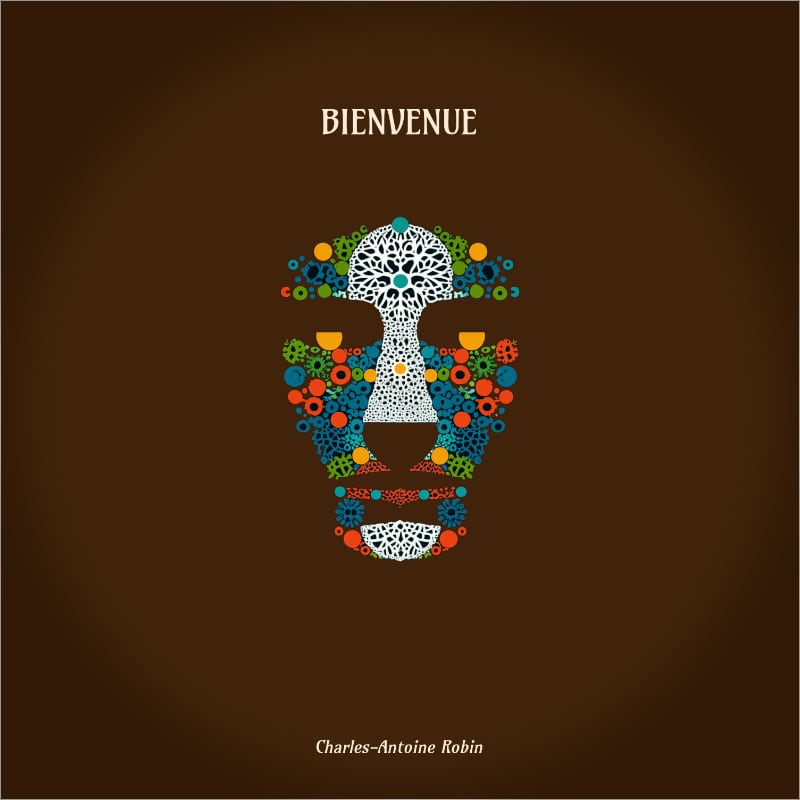
N°0 - Bienvenue (Ballade)

N°0 - A Warm Welcome


Obtenir la partition

Gratuit ou prix libre
Téléchargement immédiat


🇫🇷 "N°0 - Bienvenue" est une ballade, une invitation. Une ligne mélodique continue, quelques traits arpégés et une tonalité en Do mineur. C'est une pièce accessible... en savoir plus🇬🇧 "N°0 - A Warm Welcome" is a ballad, an invitation. A continuous melodic line, delicate arpeggios, and a C minor tonality. This piece is accessible... read more

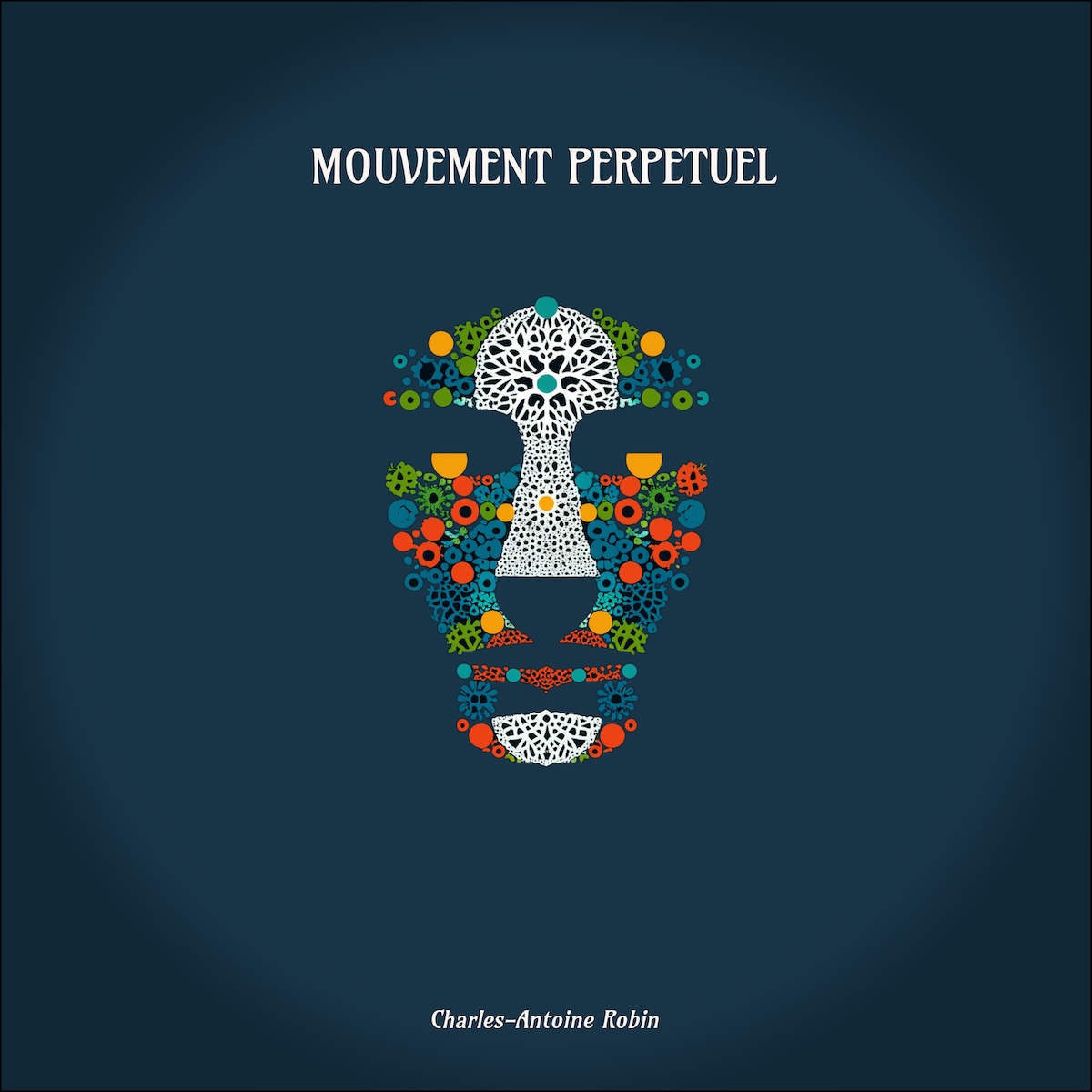
N°1 - Mouvement Perpétuel (Scherzo)

N°1 - Perpetual Motion


Obtenir la partition

Gratuit ou prix libre
Téléchargement immédiat


🇫🇷 "N°1 - Mouvement Perpétuel" est une pièce enlevée, articulée autour d’un schéma. Le temps passe, revient, mais malgré cette répétition, toujours un peu différent... en savoir plus🇬🇧 "N°1 - Perpetual Motion" is a spirited piece, built around a recurring pattern. Time passes and returns, yet despite the repetition, it is always slightly different.... read more

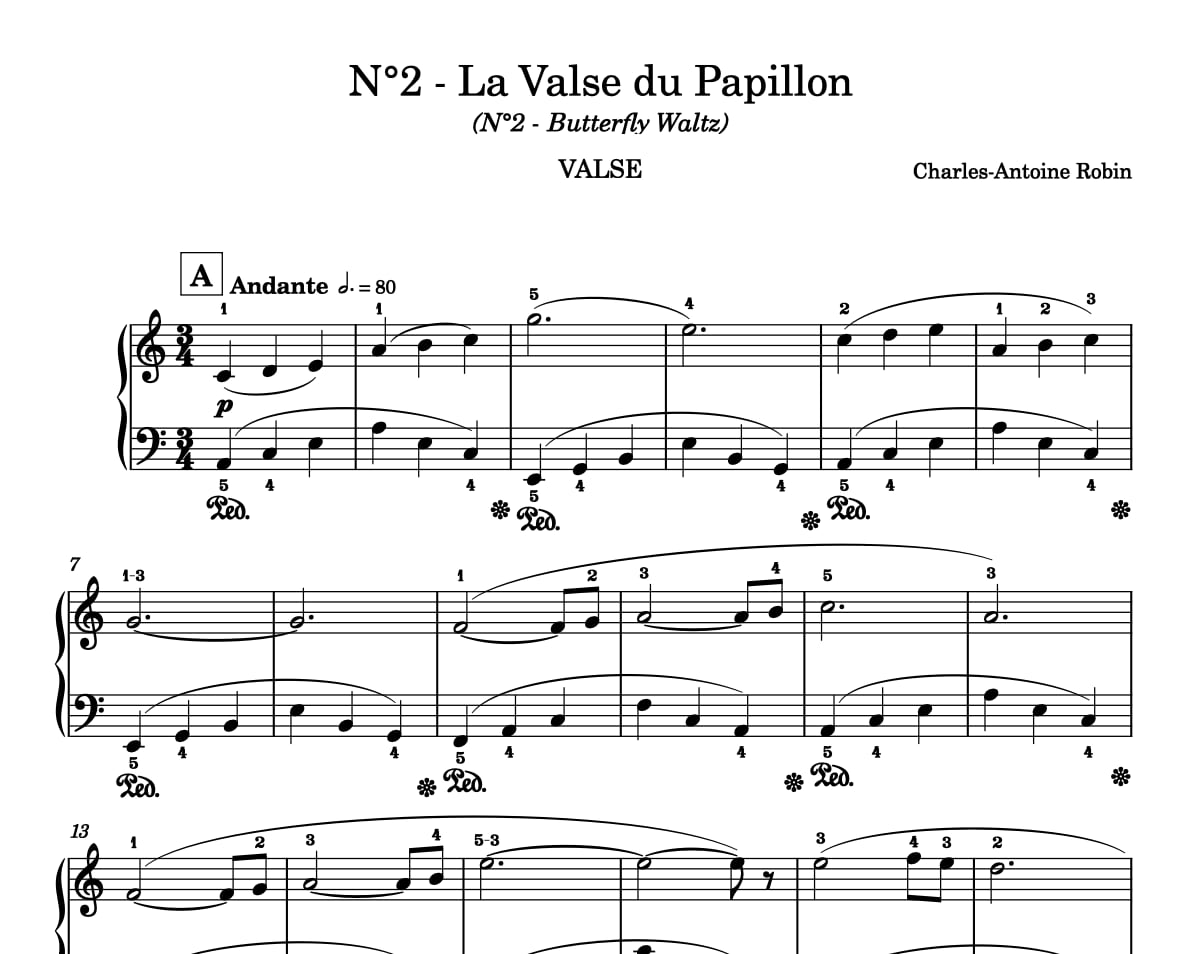
N°2 - La Valse du Papillon (Valse)

N°2 - Butterfly Waltz


Obtenir la partition

Gratuit ou prix libre
Téléchargement immédiat


🇫🇷 "N°2 - La Valse du Papillon" est une pièce assez technique pour la main gauche, en la mineur. Elle raconte la journée d’un papillon, qui s’éveille et s’étire tranquillement, et puis danse, de plus en plus, de plus en plus, jusqu’à tourbillonner... en savoir plus🇬🇧 "N°2 - The Butterfly’s Waltz"is a fairly technical piece for the left hand, in A minor. It tells the story of a butterfly’s day, waking up and stretching peacefully, then dancing more and more, more and more, until it twirls. read more

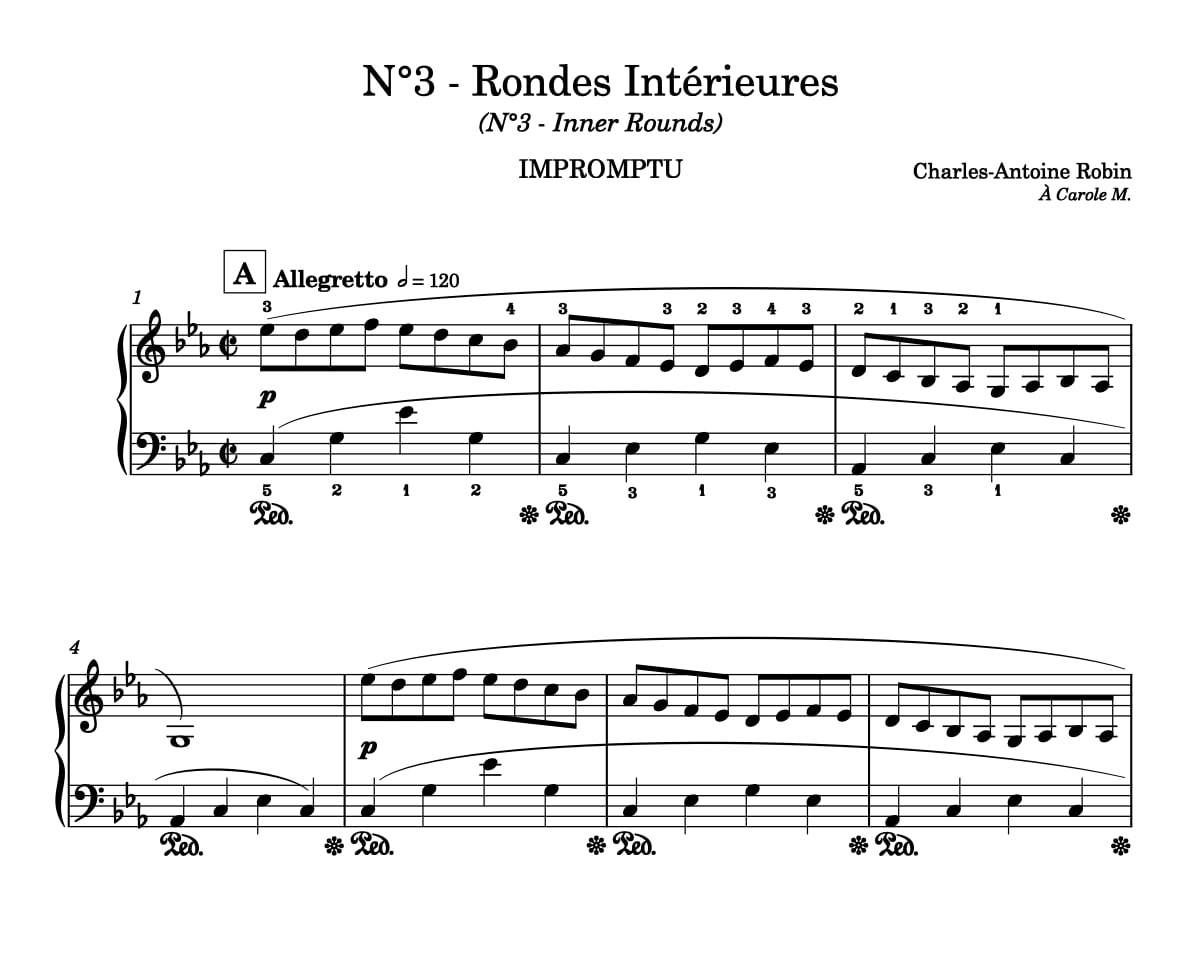
N°3 - Rondes Intérieures (Impromptu)

N°3 - Inner Rounds


Obtenir la partition

Gratuit ou prix libre
Téléchargement immédiat


🇫🇷 « N°3 - Rondes intérieures » est une pièce portant sur les « cogitations » de nuit, quand l’esprit ne peut pas s’arrêter de penser. Et on tourne sur une idée, puis sur une autre, puis sur une autre… On se parle, on s’interroge, et on tourne dans notre esprit... en savoir plus🇬🇧 "N°3 – Inner Rounds" is a piece about late-night ruminations, when the mind cannot stop thinking. We circle from one idea to another, then another... we talk to ourselves, we ask ourselves questions, and we go round and round in our minds... read more

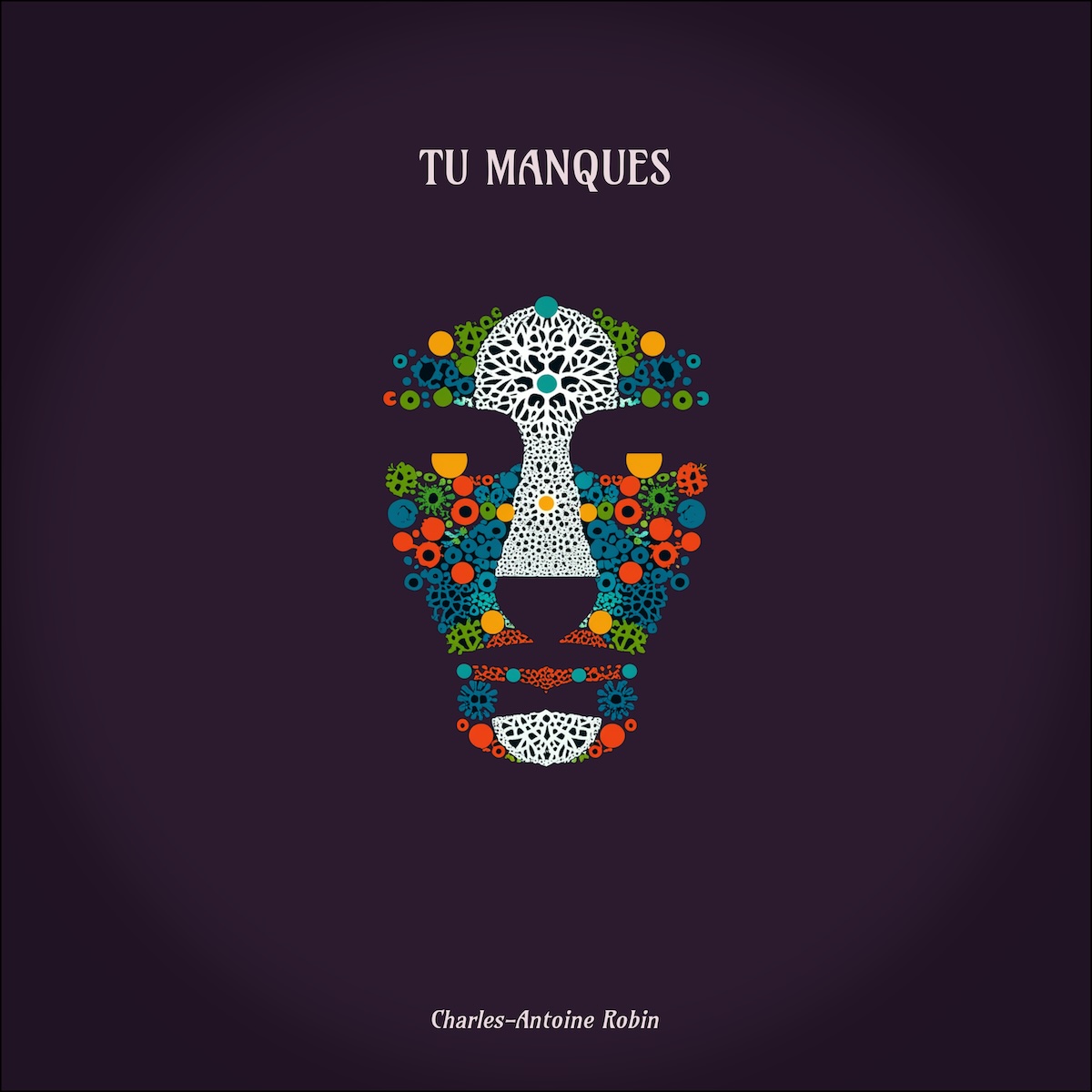
N°4 - Tu Manques (Nocturne)

N°4 - The Void You Left


Obtenir la partition

Gratuit ou prix libre
Téléchargement immédiat


🇫🇷 « N°4 – Tu manques » est une pièce mélancolique. Un fa mineur expressif, enveloppant, une modulation vers Sib mineur (la sous dominante) qui oscille entre la tendresse et le regret, nous enfonçant dans le fauteuil, ou sous la couette. Il y a des absents dans cette musique... en savoir plus🇬🇧 "N°4 - The Void You Left" is a melancholic piece. An expressive, enveloping F minor; a modulation toward B-flat minor (the subdominant) that oscillates between tenderness and regret, sinking us into our armchair or under the covers. There are missing ones in this music.... read more

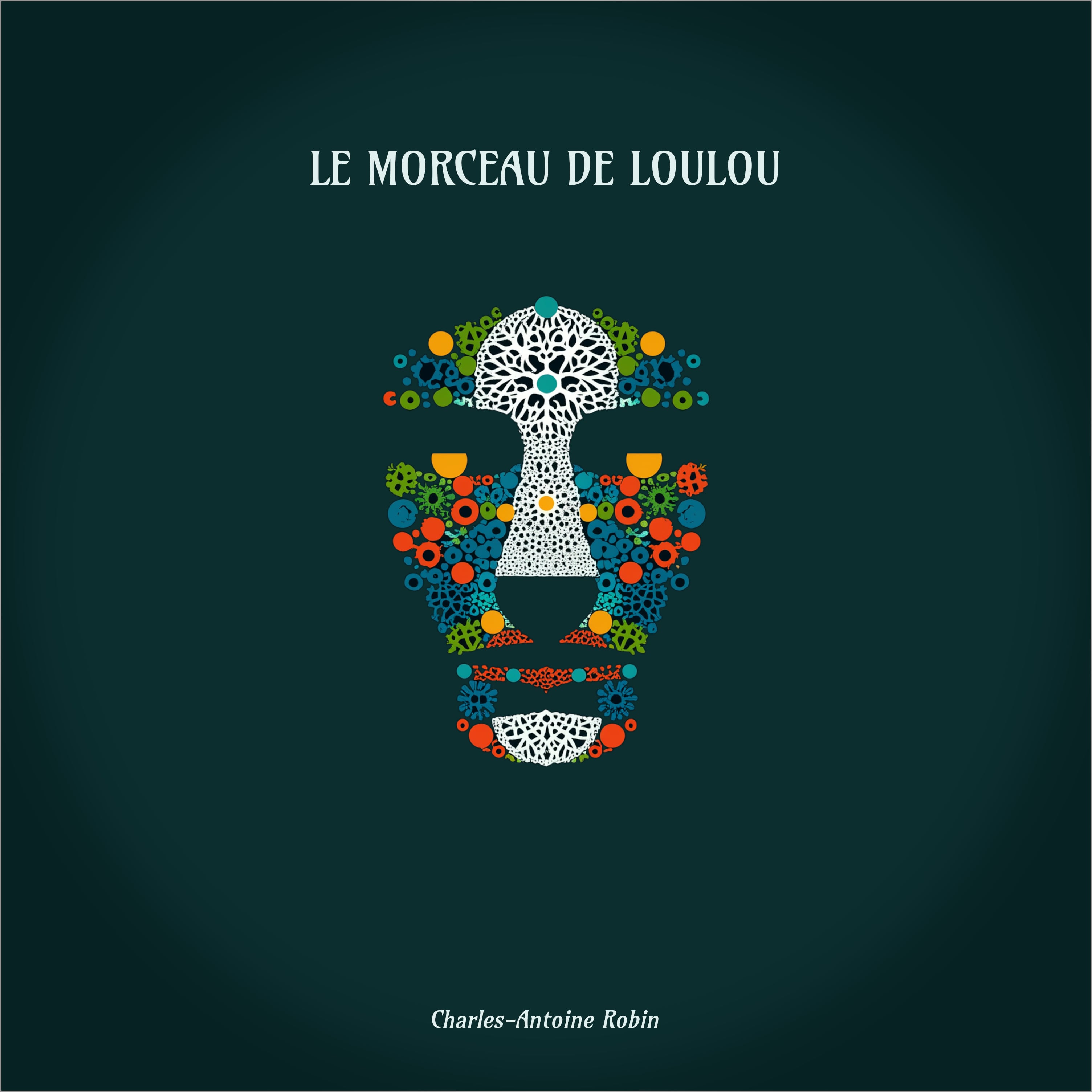
N°5 - Le Morceau de Loulou (Berceuse)

N°5 - Loulou's Lullaby


Obtenir la partition

Gratuit ou prix libre
Téléchargement immédiat


🇫🇷 "N°5 - Le Morceau de Loulou" est une pièce tendre, une berceuse.
Pièce techniquement abordable, mais toute en délicatesse, en fa mineur. Un fa mineur assez lumineux, différent de celui de « N°4 - Tu manques » (N°4 - The Void You Left)... en savoir plus
🇬🇧 "N°5 - Loulou's Lullaby" is a tender piece, a lullaby.
Technically accessible, yet full of delicacy, in F minor. An F minor quite bright, different from that of “N°4 - The Void You Left”...
read more

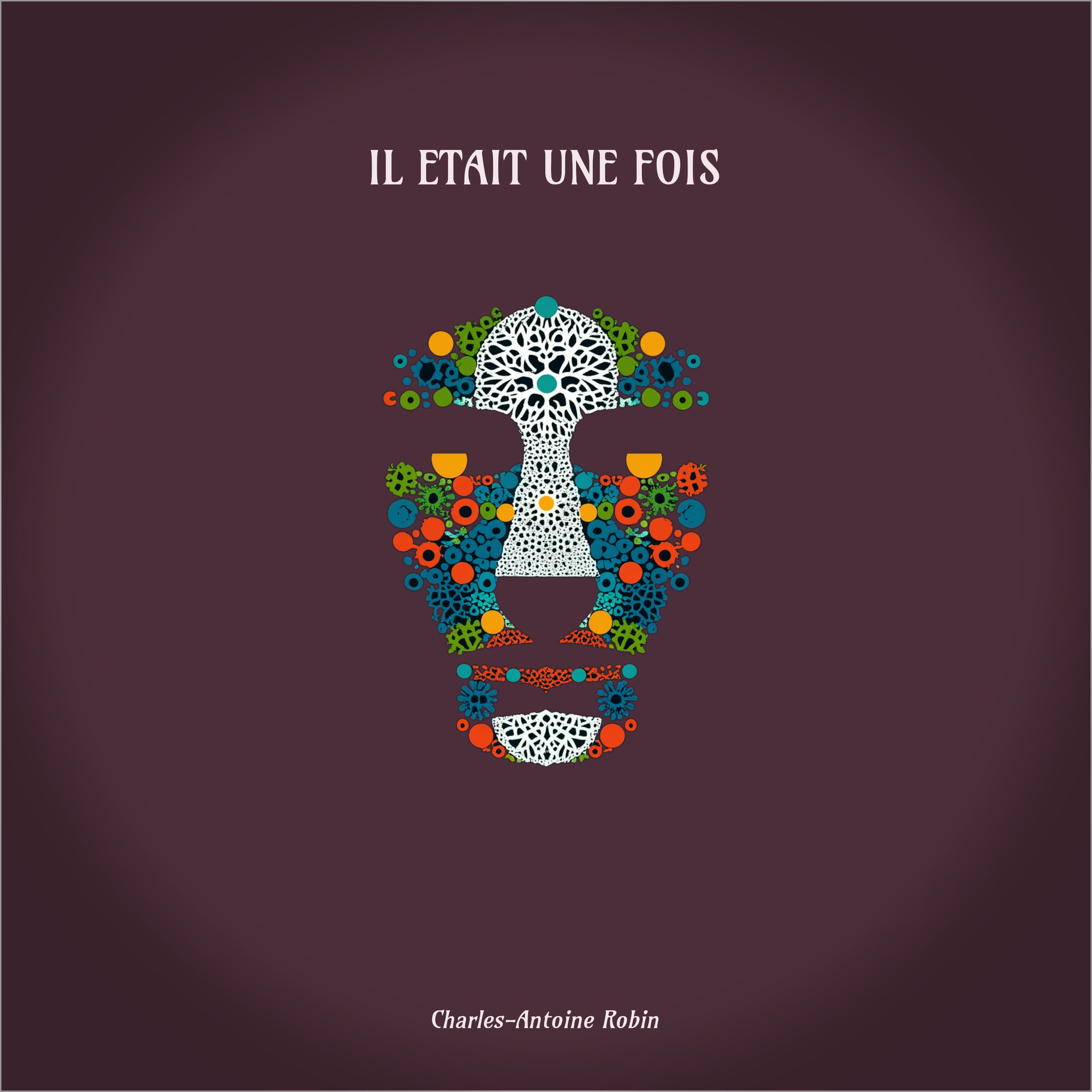
N°6 - Il était une fois (Ballade)

N°6 - Once upon a time


Obtenir la partition

Gratuit ou prix libre
Téléchargement immédiat


🇫🇷 "N°6 - Il était une fois" a été écrit en ayant à l’esprit un parent. Un parent parti, comme nous en avons tous. Un ancien, une histoire qui ne sera plus racontée par quelqu’un, mais désormais par des souvenirs. Par ceux qui restent. Un peu voilé, un peu mélancolique, mais pas triste... en savoir plus🇬🇧 "N°6 - Once Upon A Time" was written with a parent in mind. A parent who is gone, as we all have experienced. An elder, a story that will no longer be told by someone, but now by memories. By those who remain. Slightly veiled, a little melancholic, but not sad... read more

Inscrivez-vous pour être informé des mises à jour, et/ou des nouvelles publications. Votre adresse mail ne sera utilisée que pour cet usage.
Sign up to be notified of updates and/or new releases. Your email address will only be used for this purpose

Sol La La Fa Mi
Compositions pour piano
À propos
Gratuité / Soutenir
Ce site n'utilise aucun cookie de traçage
Téléchargements et Paiements sécurisés assurés par Lemon Squeezy
Mentions Légales

Sol La La Fa Mi
Piano Compositions
About
Free / Support
This website does not use any tracking cookies.
Secure Downloads & Payments powered by Lemon Squeezy
Legal Notice.

🇫🇷 "N°0 - Bienvenue" est une ballade, une invitation. Une ligne mélodique continue, quelques traits arpégés et une tonalité en Do mineur. C'est une pièce accessible, avec une main gauche chantante et une main droite fluide et narrative. Petit conseil : les petites tierces mesure 23 ne sont pas si difficiles : "tenez" le sol avec le pouce comme je l'ai indiqué, cela vous aidera à "poser" la main et à sortir ces tierces sans raideur. J'indique aussi les substitutions de doigtés à la main gauche pour rester aussi legato et ancré que possible dans le chant de la basse.Points clésMain Gauche : Substitutions, écarts à l'octave
Main Droite: Flux mélodieux continu, légère polyphonie, tierces
Rythme: Changements de signature (4/4, 5/4, 2/4)
Autre : Important ! Le par cœur lent est la clé
Fiche TechniqueTonalité : Do mineur
Tempo : Andante (env. ♩= 84)
Durée : ~ 2'10"
Pages : 4
Doigtés : Oui (adaptés "petites mains")
Niveau : 2ème cycle / Intermediate (Grade 4-5)

🇬🇧 "N°0 - A Warm Welcome" is a ballad, an invitation. A continuous melodic line, delicate arpeggios, and a C minor tonality. This piece is accessible, featuring a singing left hand and a fluid, narrative right hand. Tip: The small thirds in measure 23 aren't as difficult as they seem: "hold" the G with your thumb as written—it will help you "ground" your hand and play those thirds without tension. I have explicitly marked the finger substitutions for the left hand to keep the bass line as legato and anchored as possible.
 
Key Learning PointsLeft Hand: Finger substitutions, octave stretches.
Right Hand: Continuous melodic flow, light polyphony, thirds.
Rhythm : Time signature changes
Other : Essential ! Slow practice and memorization are the first steps.
Technical SpecsKey : C minor
Tempo : Andante (env. ♩= 84)
Duration : ~ 2'10"
Pages : 4
Fingerings : Yes (small hands friendly)
Level: 2ème cycle / Intermediate (Grade 4-5)

🇫🇷 "N°1 – Mouvement Perpétuel" est une pièce enlevée, articulée autour d’un schéma.
Le temps passe, revient, mais malgré cette répétition, toujours un peu différent.
Les pédales, les intentions, les articulations, les nuances changent, indiciblement. Passer d’une battue à la blanche à une battue à la noire ne change pas le temps, mais le balancement.
Une main gauche « pilier », imperturbable. Elle est le temps.
Quelques grands écarts (10èmes) à aller chercher à gauche dans l’envolée à partir de la mesure 59, mais pas si difficiles.
Une main droite qui peut chauffer un peu avec des accords rapides à enchainer ->  à caler lentement, souplement, tranquillement.
Une main droite qui ne pourra pas s’échapper de sa main gauche, ce temps implacable. Mais elle essayera.
Points clésMain droite : De l’endurance ! Accords, rapidité, rythmes syncopés (mais des passages en octave pour la reposer).
Main gauche : Déplacements (10ème).
Signatures rythmiques : Changements de battue (à la blanche, à la noire), 2/2, 4/4, 2/4.
Timbres / nuances : Nombreuses alternances, pédale dolce, jeu rapide mais pas fort, Con Brio, etc.
Intention : Restituer le sentiment que l’horloge tourne.
Fiche TechniqueTonalité : Do mineur
Mesure(s) : 2/2 , 4/4, 2/4
Indication(s) de Tempo : Vivace, Allegro, Adagio
Durée : 3’04 environ
Nb de pages: 7,5
Doigtés : Oui (proposition du compositeur)
Niveau : Fin de 2ème Cycle

🇬🇧 "N°1 – Perpetual Motion" is a spirited piece, built around a recurring pattern. Time passes and returns, yet despite the repetition, it is always slightly different.
Pedaling, intentions, articulations, and nuances change subtly throughout. Switching from a half-note (minim) pulse to a quarter-note (crotchet) beat doesn't alter the tempo, but rather the swing of the movement.
A "pillar-like" left hand, imperturbable. It represents time itself.
A few large stretches (10ths) for the left hand during the build-up starting at bar 59, though they aren't as difficult as they might seem.
A right hand that might "feel the heat" with rapid chord sequences -> to be practiced slowly, flexibly, and calmly.
A right hand that cannot escape its left hand—that relentless time. But it will try.
Key Learning PointsRight Hand: Endurance! Fast chords, speed, and syncopated rhythms (with octave passages to allow for brief rest).
Left Hand: Leaps and stretches (10ths)
Time Signatures: Rhythmic shifts, switching between half-note and quarter-note pulses, 2/2, 4/4, and 2/4.
Timbre / Dynamics: Frequent contrasts, dolce pedal, playing fast but softly, Con Brio, etc.
Intention: Conveying the relentless feeling of a ticking clock.
Technical SpecsKey: C Minor
Time Signature(s): 2/2, 4/4, 2/4 Tempo: Vivace, Allegro, Adagio
Duration: Approx. 3’04”
No. of Pages: 7.5
Fingerings: Yes (composer's suggestion)
Level: Late Intermediate (End of 2nd Cycle)

🇫🇷 "N°2 - La Valse du Papillon" est une pièce assez technique pour la main gauche, en la mineur. Elle raconte la journée d’un papillon, qui s’éveille et s’étire tranquillement, et puis danse, de plus en plus, de plus en plus, jusqu’à tourbillonner.
La main gauche travaille ici ! Arpèges simples pour prendre l’empreinte, et la « pompe » arrive (basse au 5ème doigt, et 4,2,1 en accords). Des petites tenues mesures 41 et 42 : à bien préparer lentement.
Le temps compte pour notre papillon, il va danser, danser, danser, jusqu’à en perdre le 3/4 de la valse !
Ce morceau a deux fins : il peut se terminer mesure 97.
Pour celles et ceux qui attaqueront le prestissimo à la mesure 98, il faut imaginer un soubresaut, une envie folle  pour notre papillon de ne pas laisser le soleil se coucher, et d’aller s’étourdir dans une dernière ronde. Un passage en triolets rapides, quelques 4 pour 3, des cloches à faire sonner, et une fin paisible, bien méritée, après cette folle journée.
Pour celles et ceux qui redouteraient ce passage : la lenteur est le secret, tout se joue lentement. Et un jour… vous papillonnerez, c’est sur !
Points clésIndépendance des mains : Accompagnement de valse à gauche et mélodie à droite, mouvements contraires, 4 pour 3, etc.
Main gauche : Endurance, arpèges, « la pompe », tenues
Modification de signature rythmique: 3/4 ; 4/4
Technique : Jouer vite, mais légèrement !
Intention : Restituer l’empressement et la soif de vivre. Le morceau est en mineur, mais surtout pas triste.
Fiche TechniqueTonalité : La mineur
Mesure(s) : 3/4 ; 4/4
Indication(s) de Tempo : Andante ; Andante Moderato ; Prestissimo
Durée : 2’30 environ
Nb de pages: 6,5
Doigtés : Oui (proposition du compositeur, petite main)
Niveau : Fin de 2ème Cycle

🇬🇧 "No. 2 - The Butterfly’s Waltz"is a fairly technical piece for the left hand, in A minor. It tells the story of a butterfly’s day, waking up and stretching peacefully, then dancing more and more, more and more, until it twirls.
The left hand is working here! Simple arpeggios to establish the hand shape, and then the "waltz bass" kicks in (bass on the 5th finger, and 4, 2, 1 for the chords). Small held notes in bars 41 and 42: prepare them well and slowly.
Time counts for our butterfly; it will dance and dance and dance, until it loses the 3/4 waltz time!
This piece has two endings: it can end at bar 97.
For those who tackle the prestissimo at bar 98, you must imagine a sudden burst, a wild desire for our butterfly not to let the sun go down, and to lose itself in one last dance.
A passage in fast triplets, some 4 against 3, bells to be rung, and a peaceful, well-deserved end after this crazy day.
For those who might fear this passage: slowness is the secret, everything is played slowly. And one day… you will flutter, for sure!
Key Learning PointsHand Independence: Waltz accompaniment in the left hand and melody in the right, contrary motion, 4-against-3, etc.
Left Hand: Endurance, arpeggios, "waltz bass," held notes.
Time Signature Changes: 3/4; 4/4.
Technique: Playing fast, but lightly!
Musical Intent: Conveying eagerness and a thirst for life. The piece is in a minor key, but definitely not sad.

Technical Specs
Key: A Minor
Time Signature(s): 3/4; 4/4
Tempo Marking(s): Andante; Andante Moderato; Prestissimo
Duration: Approx. 2:30
Pages: 6.5
Fingerings: Yes (composer's suggestion, for small hands)
Level: Late Intermediate (End of 2nd Cycle)

🇫🇷 « N°3 – Rondes intérieures » est une pièce portant sur les « cogitations » de nuit, quand l’esprit ne peut pas s’arrêter de penser. Et on tourne sur une idée, puis sur une autre, puis sur une autre… On se parle, on s’interroge, et on tourne dans notre esprit.
Une forme impromptu, une main gauche très importante, présente. Des passages syncopées à droite, un petit travail sur les octaves dans la troisième partie qui ne résistera pas à un travail lent, ou simplement à le jouer bien plus souvent lentement que rapidement. J’indique des vitesses indicatives, plus lent ou plus rapide, abordez le comme c’est confortable pour vous.
Points clésIndépendance des mains : La main gauche chante, basse d’alberti à gauche et octaves à droite, petite conduite de voie dans la conclusion, la main droite rappelant le motif de l’introduction sur celui de la deuxième partie.
Main droite : De la légereté dans des traits continus, un travail d’octave, 2 motifs dans la conclusion
Pédales : Petit jeu de pédale rythmique dans la fin de la partie 1.
Jeu sans pédale dans la partie 2.
Intention : La partie 2. bien que légèrement technique, doit garder un timbre réfléxif, pensif, et non de démonstration de dextérité.
Fiche TechniqueTonalité : Do mineur
Mesure(s) : 2/2
Tempo : Allegretto (Blanche à 120)
Durée : 2’00 environ
Nb de pages: 5
Doigtés : Oui (proposition du compositeur, petite main)
Niveau : Intermédiaire / Fin de 2ème Cycle

🇬🇧 "No. 3 – Inner Rounds" is a piece about late-night ruminations, when the mind cannot stop thinking. We circle from one idea to another, then another... we talk to ourselves, we ask ourselves questions, and we go round and round in our minds.
It has an impromptu form and a very important, prominent left hand. There are syncopated passages in the right hand and some octave work in the third part that will yield to slow practice—or simply by playing it slowly much more often than fast. I have provided suggested tempos; feel free to approach them however is most comfortable for you.
Key Learning PointsHand Independence: The left hand sings, with Alberti bass in the left and octaves in the right; slight voice leading in the conclusion, with the right hand recalling the motif of the introduction over the motif of the second part.
Right Hand: Lightness in the continuous runs, octave work, and two motifs in the conclusion.
Pedaling: Brief rhythmic pedaling at the end of Part 1. Played without pedal in Part 2.
Musical Intent: Part 2, though slightly technical, must maintain a reflective, pensive tone rather than a demonstration of dexterity.
Technical SpecsKey: C Minor
Time Signature(s): 2/2
Tempo : Allegretto (Half-note = 120)
Duration: Approx. 2:00
Pages: 5
Fingerings: Yes (composer's suggestion, for small hands)
Level: Intermediate / Late Intermediate (End of 2nd Cycle)

🇫🇷 « N°4 – Tu manques » est une pièce mélancolique. Un fa mineur expressif, enveloppant, une modulation vers Sib mineur (la sous dominante) qui oscille entre la tendresse et le regret, nous enfonçant dans le fauteuil, ou sous la couette.
Il y a des absents dans cette musique.
Avec les années, les visages s’estompent, les voix s’oublient, les souvenirs s’échappent. Mais nous les savons là, et il faut parfois chercher, explorer dans notre mémoire, pour les ramener, le temps d’une pensée.
Dans cette pièce, j’aime jouer avec les résonances, les pédales et les retards. Je la joue assez lentement. La version écrite présente un certain jeu de nuances, mais je change souvent, selon mon humeur. Surtout la dernière partie avec les arpèges à la main gauche : soit jouée assez fort en faisant sonner le sol en bas, ou plutôt feutrée avec la pédale dolce.
Points clésMain gauche : Pas de difficultés techniques importantes, basse d’Alberti, des notes à faire ressortir, des arpèges descendants à articuler à la fin, dans un timbre feutré.
Pédale : Mesure 53 ! Il faut noyer l’arrivée du Sib mineur dans la résonance (ma proposition) et amener la main gauche indiciblement, en profitant du Crescendo qui le précède
Nuances : Ton intime, feutré, avec néanmoins un bref agitato à faire sonner.
Dissonances : Bien respecter la partition pour certaines notes de la main gauche…. ces petites dissonances, retards, marquent l’estompe des souvenirs.
Fiche TechniqueTonalité : Fa Mineur
Mesure(s) : 4/4
Tempo : Andante Moderato
Durée : 3'40 environ
Nb de pages: 4,5
Doigtés : Oui (proposition du compositeur, petite main)
Niveau : Intermédiaire / Fin de 2ème Cycle

🇬🇧 "N°4 -The Void You Left" is a melancholic piece. An expressive, enveloping F minor; a modulation toward B-flat minor (the subdominant) that oscillates between tenderness and regret, sinking us into our armchair or under the covers.
There are missing ones in this music.
Over the years, faces fade, voices are forgotten, and memories escape. But we know they are there, and sometimes we must search and explore our memory to bring them back, just for the duration of a thought.
In this piece, I like to play with resonance, pedaling, and delays. I tend to play it rather slowly. The written version includes a certain dynamic shaping, but I often vary it depending on my mood—especially in the final section with the left-hand arpeggios: either played quite strongly, bringing out the low G, or more subdued, with the soft pedal
Key Learning PointsLeft Hand : No major technical difficulties, Alberti bass, notes to bring out, descending arpeggios to be articulated at the end, in a hushed tone.
Pedaling: Bar 53! You must drown the arrival of B-flat minor in resonance (my suggestion) and bring in the left hand imperceptibly, taking advantage of the preceding crescendo.
Nuances: Intimate, hushed tone, yet with a brief agitato to be brought out.
Dissonances: Follow the score carefully for certain notes in the left hand… these small dissonances and suspensions mark the fading of memories.
Technical SpecsKeys: F Minor, then B-flat Minor
Time Signature: 4/4
Tempo Marking(s): Andante Moderato (approx. ♩= 96)
Duration: Approx. 3:40
Pages: 4.5
Fingerings: Yes (composer's suggestion, for small hands)
Level : Intermediate / Late Intermediate (End of 2nd Cycle)

🇫🇷 "N°5 - Le Morceau de Loulou" est une pièce tendre, une berceuse.
Pièce techniquement abordable, mais toute en délicatesse, en fa mineur. Un fa mineur assez lumineux, différent de celui de « N°4 - Tu manques » (N°4 - The Void You Left)
Utiliser la pédale douce, rester dans un petit cocon, dans une tendresse, un echo. Elle raconte, dans un temps très court, un dialogue symbolique entre un enfant et un parent. Qui apprennent l’un de l’autre, qui se transmettent du sens, sans même le savoir. Dans le passage dans les graves, j’entends la voix de Jean Réno, c’est plus fort que moi. Jean Réno qui raconte, prend sous son aile, écoute, explique, transmet. Mufassa n’est pas loin….Points clésRythmes : Des rythmes syncopés, des valeurs pointées à mettre en place
Conduite de voix : De la polyphonie à la main droite, avec des petits contrechants à faire sonner. Dans la réexposition, à main gauche, bien distinguer la basse, et le motif dans le médium, qui chante avec la main droite.
Nuances / Pédales : L’interlude est scandé avec une petite pédale de liaison, et une pédale rythmique
Fiche TechniqueTonalité : Fa mineur
Mesure(s) : 4/4 (petit passage en 2/4)
Indication(s) de Tempo : Moderato (env. ♩= 108)
Durée : 2’00 environ
Nb de pages: 4
Doigtés : Oui (proposition du compositeur, petite main)
Niveau : Intermédiaire / Fin de 2ème Cycle

🇬🇧 "N°5 - Loulou's Lullaby' is a tender piece, a lullaby.
Technically accessible, yet full of delicacy, in F minor. An F minor quite bright, different from that of “N°4 - The Void You Left”.
Use the soft pedal, stay in a small cocoon, in tenderness, with an echo. It tells, in a very short time, a symbolic dialogue between a child and a parent. They learn from each other, transmitting meaning without even knowing it. In the passage in the lower register, I hear Jean Reno’s voice; it’s stronger than me. Jean Reno who tells, guides, listens, explains, transmits. Mufasa isn’t far….Key Learning PointsRhythms: Syncopated rhythms, dotted notes to be carefully placed
Voice Leading: Polyphony in the right hand, with small counter-melodies to make resonate. In the recapitulation, in the left hand, clearly distinguish the bass and the motif in the middle register, which sings with the right hand.
Dynamics / Pedals: The interlude is marked with a small connecting pedal, and a rhythmic pedal
Technical SpecsKey: F minor
Time Signature(s): 4/4 (short passage in 2/4)
Tempo Marking(s): Moderato (approx. ♩ = 108)
Duration: approx. 2’00
Number of Pages: 4
Fingerings: Yes (composer’s suggestion, small hand)
Level: Intermediate / End of 2nd Cycle

🇫🇷 "N°6 - Il était une fois" a été écrit en ayant à l’esprit un parent. Un parent parti, comme nous en avons tous. Un ancien, une histoire qui ne sera plus racontée par quelqu’un, mais désormais par des souvenirs. Par ceux qui restent. Un peu voilé, un peu mélancolique, mais pas triste. Ce morceau en la mineur n’est pas triste.
Restent les souvenirs, même lointains, les photos, les œuvres, les écrits. Ce qui nous fait sourire. Cette pièce n’est pas faite de virtuosité, mais est assez exigeante. Faire ressortir la mélodie, faire chuchoter les accords. Ils sont là pour soutenir l’histoire. J’ai choisi de faire figurer les durées de notes « perçues », même si les répétitions des accords ne rendent pas possibles les tenues, qui seront faites avec la pédale. Mais cela vous donnera le guide mélodique. Le retour du thème initial avec sextolets à gauche, double croches à droites, en mouvement contraires demandera un peu de travail, mais vous verrez que cela tombe bien sous les doigts (aidez vous des poignets).
J’espère que vous trouverez un peu d’écho dans ce morceau, ou peut-être une autre histoire, un autre sens, d’autres images. Je me ferais un plaisir d’écouter vos versions.
Points clésIndépendance des mains : Mouvements contraires rapides, Mélodie passant de la main droite à la main gauche.
Modification de signature rythmique : 2/2 et 4/4
Accords : Beaucoup d’accords à 4 sons, à main droite comme à main gauche (prise d’empreinte)
Endurance : Il faudra tenir le final sans raidir.. ça joue vite, mais pas fort… il faut rester souple jusqu’au Fortissimo
Main gauche : La main gauche travaille dans cette pièce (accords à 4 sons, accompagnement basse + accords à 3 sons, sextolets, quelques déplacements, et retour au calme).
Fiche TechniqueTonalité : La mineur
Mesure(s) : 2/2 et 4/4
Indication(s) de Tempo : Andante, Allegro Moderato, Andantino, Andante Moderato
Durée : 4’10 environ
Nb de pages: 9
Doigtés : Oui (proposition du compositeur, petite main)
Niveau : Intermédiaire / Fin de 2ème Cycle

🇬🇧 "N°6 - Once Upon A Time" was written with a parent in mind. A parent who is gone, as we all have experienced. An elder, a story that will no longer be told by someone, but now by memories. By those who remain. Slightly veiled, a little melancholic, but not sad. This piece in A minor is not sad.
What remains are the memories, even distant ones, the photos, the works, the writings. What makes us smile. This piece is not about virtuosity, yet it is fairly demanding. Bring out the melody, let the chords whisper. They are there to support the story. I chose to indicate the perceived note durations, even though the repetitions of the chords do not allow for sustained notes, which will be achieved with the pedal. But this will give you the melodic guide.
The return of the main theme with sextuplets in the left hand, sixteenth notes in the right hand, moving in contrary motion, will require a bit of work, but you’ll see that it fits well under the fingers (use your wrists to help).
I hope you will find some echo in this piece, or perhaps another story, another meaning, other images. I would be delighted to listen to your interpretations.
Key Learning PointsIndependence of Hands: Fast contrary movements, melody passing from the right hand to the left hand.
Change of Time Signature: 2/2 and 4/4
Chords: Many four-note chords, in both right and left hands (finger imprinting)
Endurance: You will need to sustain the ending without stiffening… it plays fast, but not loud… stay flexible up to the Fortissimo
Left Hand: The left hand is active in this piece (four-note chords, bass + three-note chords, sextuplets, some shifts, and return to calm)
Technical SpecsKey: A minor
Time Signature(s): 2/2 and 4/4
Tempo Marking(s): Andante, Allegro Moderato, Andantino, Andante Moderato
Duration: approx. 4’10
Number of Pages: 9
Fingerings: Yes (composer’s suggestion, small hand)
Level: Intermediate / End of 2nd Cycle

🇫🇷 À proposJe suis Charles-Antoine Robin, compositeur de musique pour piano."Sol La La Fa Mi" est un univers musical, une proposition artistique. Je compose des pièces pour piano qui racontent des histoires, qui sont émotionnelles, mélodiques. Mais aussi pianistiques ! Elles se veulent accessibles, mais demanderont du travail.Issu d'un cursus classique (École Cortot, Paris), j'ai été bien sûr ébahi par les études de Chopin, les sonates de Beethoven... mais... quel travail ! Quelles difficultés ! Et puis la vie professionnelle, la famille, la vie : comment travailler, retenir par cœur une sonate de 50 pages ? Et il faut être humble... certaines fugues de Bach sont terriblement difficiles.J'ai alors commencé à composer des œuvres plus abordables. Un peu plus courtes, un peu moins dures, mais toujours narratives, mélodiques, et jouables. Des œuvres que je vous propose à travers le projet "Sol La La Fa Mi".Il n'y a pas d'IA dans mon travail artistique. Une des composantes de mon projet est l'authenticité. Mes morceaux sont des bouts de vie ; ils me viennent après des rencontres, après des moments particuliers. Une pièce peut mettre des années à mûrir, au gré des hasards. Je compose au piano : papier, stylo, un petit MacBook Air M1, Dorico, mes souvenirs, et du café. Trop de café... ☕Je tiens à le préciser car à ce jour, l'humain et la création sont un peu malmenés. Soutenir ce projet, c'est soutenir l'authenticité. L'IA est une composante de la vie industrielle et professionnelle, ainsi soit-il. Moi, j'aime les gens, le partage et les hasards de la vie. Si vous êtes sur Paris, on pourra se serrer la main, boire un café à une terrasse, peut-être se croiser autour d'un piano. Je pourrai vous dire d'où vient "Le Morceau de Loulou", pourquoi "Il était une fois" est important pour moi, ou bien, ce qu'il se cache dans ce nom de projet : "Sol La La Fa Mi".L'équipe qui m'entoure est faite de personnes qui m'inspirent, d'artistes qui créent de leurs mains. Les arrangements de Strangelove sont une réelle relecture de mes pièces, un autre angle de vue proposé par un compositeur que je connais. Les visuels des partitions sont proposés par L.M, artiste étonnant, une rencontre venue des hasards de la vie. Vous trouverez ces tranches de vie cachées partout : dans mes dédicaces, dans les citations que je glisse dans mes pièces, etc.

🇬🇧 AboutI am Charles-Antoine Robin, a composer of piano music."Sol La La Fa Mi" is a musical universe, an artistic proposition. I compose piano pieces that tell stories, that are emotional and melodic. But also pianistic! They are intended to be accessible, but will still require some work.With a classical background (École Cortot, Paris), I was of course amazed by Chopin’s études, Beethoven’s sonatas… but… what work! What difficulty! And then professional life, family, life itself: how can one practice and memorize a 50-page sonata? And one must stay humble… some of Bach’s fugues are tremendously difficult.I then began composing more approachable works. A bit shorter, a bit less difficult, but still narrative, melodic, and playable. These are the works I offer through the "Sol La La Fa Mi" project.There is no AI in my artistic work. Authenticity is one of the key elements of my project. My pieces are fragments of life; they come to me after encounters, after particular moments. A piece can take years to mature, shaped by chance. I compose at the piano: paper, pen, a small MacBook Air M1, Dorico, my memories, and coffee. Too much coffee… ☕I want to make this clear because, today, humanity and creation are somewhat challenged. Supporting this project means supporting authenticity. AI is part of industrial and professional life, so be it. As for me, I like people, sharing, and the randomness of life. If you are in Paris, we could shake hands, have a coffee on a terrace, maybe meet around a piano. I could tell you where "Le Morceau de Loulou" comes from, why "Il était une fois" matters to me, or what lies behind the project name: "Sol La La Fa Mi".The team around me is made up of people who inspire me, artists who create with their hands. The Strangelove arrangements are a genuine reinterpretation of my pieces, another perspective offered by a composer I know. The sheet music visuals are created by L.M, a remarkable artist, another encounter shaped by chance. You will find these slices of life hidden everywhere: in my dedications, in the quotes I include in my pieces, etc.

Gratuité : Je crois au participatif, vraiment. mes partitions sont gratuites (ou prix libre) pour un usage privé et personnel. Vous pouvez essayer, travailler, éprouver mon répertoire. Les partitions gratuites (ou prix libre) sont bien les originales : elles ne sont ni plus courtes, ni simplifiées.
Acheter une des partitions payantes est un soutien important, pour le projet, et pour les artistes qui y contribuent. Vous pourrez les acheter en conscience, si vous le pouvez, le souhaitez. Au prix qui vous convient à partir de 10€. (Modèle "Pay What You Want")
Streaming : Ajoutez mes titres à vos playlists sur Spotify, Apple Music, Youtube, Deezer, mais encore Qobuz, Tidal, etc. C'est un soutien gratuit, réel, et précieux.Échanges : Faites-moi vos retours ! Savoir comment mes pièces sonnent chez vous et ce qu'elles vous inspirent, m'intéresse. N'hésitez pas à laisser un avis sur la page ou à m'écrire pour partager vos impressions.Partage : Vous jouez mes morceaux ? Postez vos vidéos et Réels en me taguant. Je compose pour raconter des histoires : c'est génial de voir mes œuvres circuler et vivre en dehors de mon monde.

🇬🇧 Free Access: I truly believe in participatory sharing. My scores are free (or pay what you want) for private, personal use. You can try them, work on them, explore my repertoire. The free scores (or pay what you want) are the original versions: they are neither shorter nor simplified.
Purchasing one of the paid scores is a way to support the project and the artists who contribute to it. You can buy them consciously, at a price you choose starting from €10. (“Pay What You Want” model)
Streaming: Add my tracks to your playlists on Spotify, Apple Music, Youtube, Deezer, It’s a free, real, and valuable form of support.Feedback: Share your thoughts with me. Knowing how my pieces sound in your home and what they inspire in you matters to me. Feel free to leave a review on the page or write to me to share your impressions.Sharing: Do you play my pieces? Post your videos and Reels and tag me. I compose to tell stories: it’s great to see my works circulate and take on a life beyond my own world.

🇫🇷 Mentions légales1. Éditeur
Charles-Antoine Robin, compositeur
Issy-les-Moulineaux, France
[email protected]
Directeur de la publication : Charles-Antoine Robin
2. Hébergement
Carrd Inc., Franklin, TN, USA
https://carrd.co/contact
3. Propriété intellectuelle
Tous les contenus (musique, partitions, visuels) sont protégés.
Toutes mes œuvres sont déposées légalement (MusicStart), je suis sociétaire SACEM.
Activité déclarée
SIRET : 934 258 120 00021
Toute reproduction est interdite sans autorisation.
4. Partitions gratuites / Ventes
La majorité des partitions sont proposées gratuitement et/ou en "Prix libre".
Les paiements et la livraison des partitions numériques (PDF) sont gérés par Lemon Squeezy, agissant en tant que revendeur (Merchant of Record).
Lemon Squeezy assure la sécurité des transactions, la conformité légale, la facturation et la gestion des taxes.
Leurs conditions générales s’appliquent à chaque achat.
5. Données
Aucune donnée n’est collectée directement sur ce site. Les données liées aux achats sont traitées par Lemon Squeezy. Toute demande RGPD doit leur être adressée.
6. Cookies
Pas de cookies de suivi à des fins marketing.

🇬🇧 Legal Notice1. Publisher
Charles-Antoine Robin, composer
Issy-les-Moulineaux, France
[email protected]
Director of Publication : Charles-Antoine Robin
2. Hosting
Carrd Inc., Franklin, TN, USA

https://carrd.co/contact
3. Intellectual Property
All content (music, sheet music, visuals) is protected.
All my works are legally deposited (MusicStart), and I am a SACEM member.
Registered activity
SIRET: 934 258 120 00021
Any reproduction is prohibited without permission.
4. Free / Paid Sheet Music
The majority of the sheet music is offered on a “Pay What You Want” basis, allowing them to be obtained for free or via voluntary contribution.
Payments and delivery of digital sheet music (PDF) are managed by Lemon Squeezy, acting as the reseller (Merchant of Record).
Lemon Squeezy ensures transaction security, legal compliance, invoicing, and tax management.
Their terms and conditions apply to each purchase.
5. Data
No data is collected directly on this site. Data related to purchases is handled by Lemon Squeezy. Any GDPR requests must be addressed to them.
6. Cookies
No tracking cookies are used for marketing purposes.

Vos impressions m'intéressent. Une question ? Une remarque ? N'hésitez pas à m'écrire.Your feedback matters to me. Have a question or a comment? Feel free to reach out.Charles-Antoine